










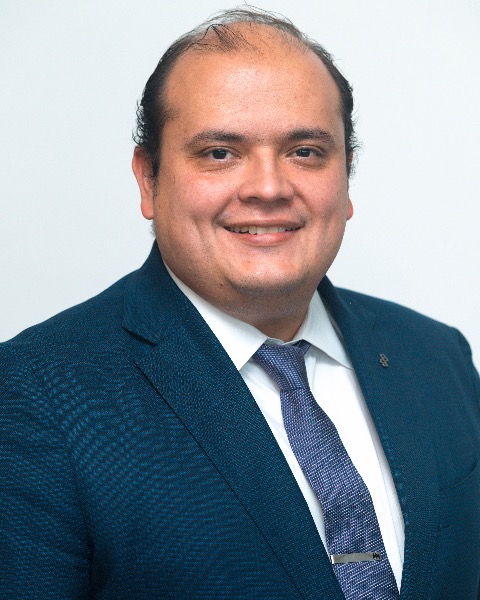
Colorectal Surgeon
Complejo Asistencial Doctor Sotero del Rio
Santiago, Region Metropolitana, Chile
Dr. Felipe Quezada-Díaz is a colorectal surgeon and surgical oncologist based in Santiago, Chile, practicing at the Complejo Asistencial Dr. Sótero del Río and Clínica Universidad de los Andes. He completed advanced international training in colorectal cancer, including a fellowship at Memorial Sloan Kettering Cancer Center (MSKCC) in New York, which significantly shaped his clinical and academic approach to rectal cancer management. His career has been driven by a strong commitment to improving outcomes for patients with colorectal cancer, particularly within public healthcare systems where resource constraints are significant and the clinical need is substantial.
His clinical and academic focus centers on locally advanced rectal cancer. He has developed a particular interest in organ preservation strategies, including total neoadjuvant therapy (TNT) and Watch-and-Wait approaches, aiming to avoid radical surgery when oncologically safe. This has led to the development and leadership of prospective clinical research, including the NOAHS-ARC trial, which evaluates short-course radiotherapy–based TNT in a Latin American population.
In parallel, he is actively engaged in translational research supported by national funding, including FONDECYT grant #11201291 and IDeA I+D grant #ID25I10246. Through these initiatives, he collaborates with international partners to investigate tumor biology, treatment response, and biomarker development, integrating molecular profiling and advanced tissue analyses to advance more personalized therapeutic strategies.
Beyond clinical and research activities, he is involved in public health and policy efforts focused on colorectal cancer screening. In Chile and across Latin America, limited colonoscopy capacity and prolonged waiting lists remain major barriers to early detection. His work has focused on implementing and generating evidence for fecal immunochemical test (FIT)-based strategies to prioritize patients and support the development of scalable screening programs.
Through these efforts, he strives to translate innovation into meaningful, system-level improvements in cancer outcomes.
ePosters-Mon330-M1: Rectal Cancer
Monday, May 11, 2026
3:30 PM - 5:10 PM ET