










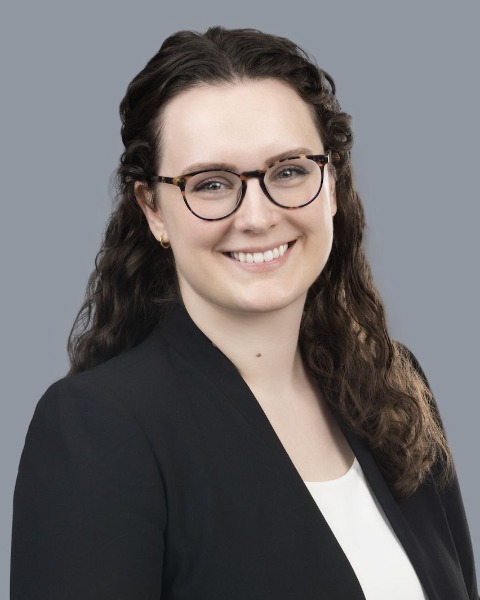
Julia Frebault, MD (she/her/hers)
General Surgery Research Resident
University of Minnesota
University of Minnesota
Minneapolis, MN, United States
Disclosure information not submitted.
Catherine Beauharnais, MD, MPH, MS
Fellow
University of Minnesota
University of Minnesota
Minneapolis, MN, United States
Disclosure information not submitted.
Max G. Hill, BS
Research Assistant
UMN Department of Surgery
St. Paul, Minnesota, United States
Disclosure information not submitted.
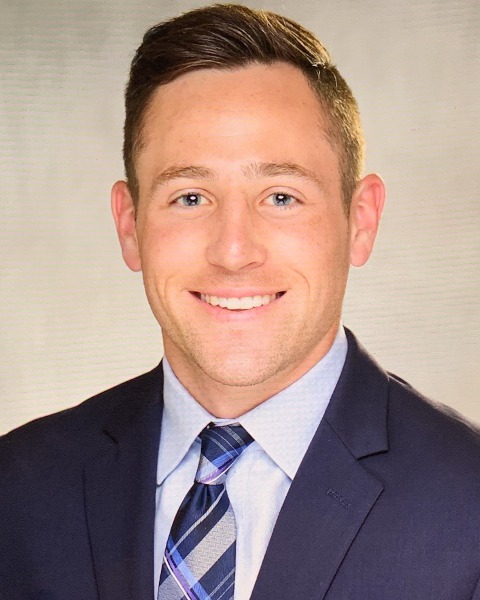
Alexander M. Troester, MD (he/him/his)
General Surgery Resident
University of Minnesota
University of Minnesota
Minneapolis, MN, United States
Disclosure information not submitted.
Sonja Boatman, MD (she/her/hers)
Resident
Universit of Minnesota
University of Minnesota
Minneapolis, MN, United States
All disclosed relationships have been reviewed and managed prior to the start of this activity. Any relevant relationships will be listed below. This individual has no financial relationships to disclose
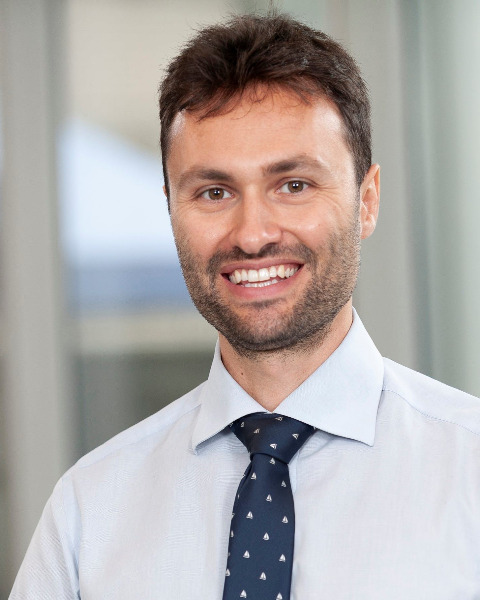
Paolo Goffredo, MD (he/him/his)
Assistant Professor
University of Minnesota
Minneapolis, MN, United States
All disclosed relationships have been reviewed and managed prior to the start of this activity. Any relevant relationships will be listed below. This individual has no financial relationships to disclose
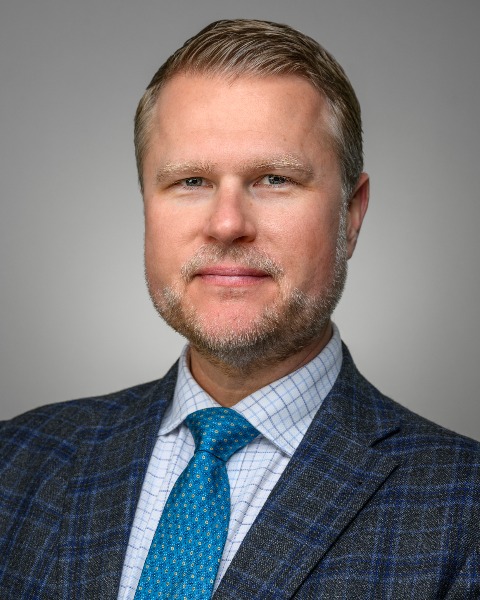
Wolfgang Gaertner, MD, MSc, MBA
Professor and Chief, Colon & Rectal Surgery
University of Minnesota
University of Minnesota
Minneapolis, MN, United States
All disclosed relationships have been reviewed and managed prior to the start of this activity. Any relevant relationships will be listed below. This individual has no relevant financial relationships.
Christopher Staley, n/a
Associate Professor
University of Minnesota
Minneapolis, Minnesota, United States
Disclosure information not submitted.
Cyrus Jahansouz, MD
Assistant Professor
University of Minnesota
University of Minnesota
Minneapolis, Minnesota, United States
All disclosed relationships have been reviewed and managed prior to the start of this activity. Any relevant relationships will be listed below. This individual has no financial relationships to disclose
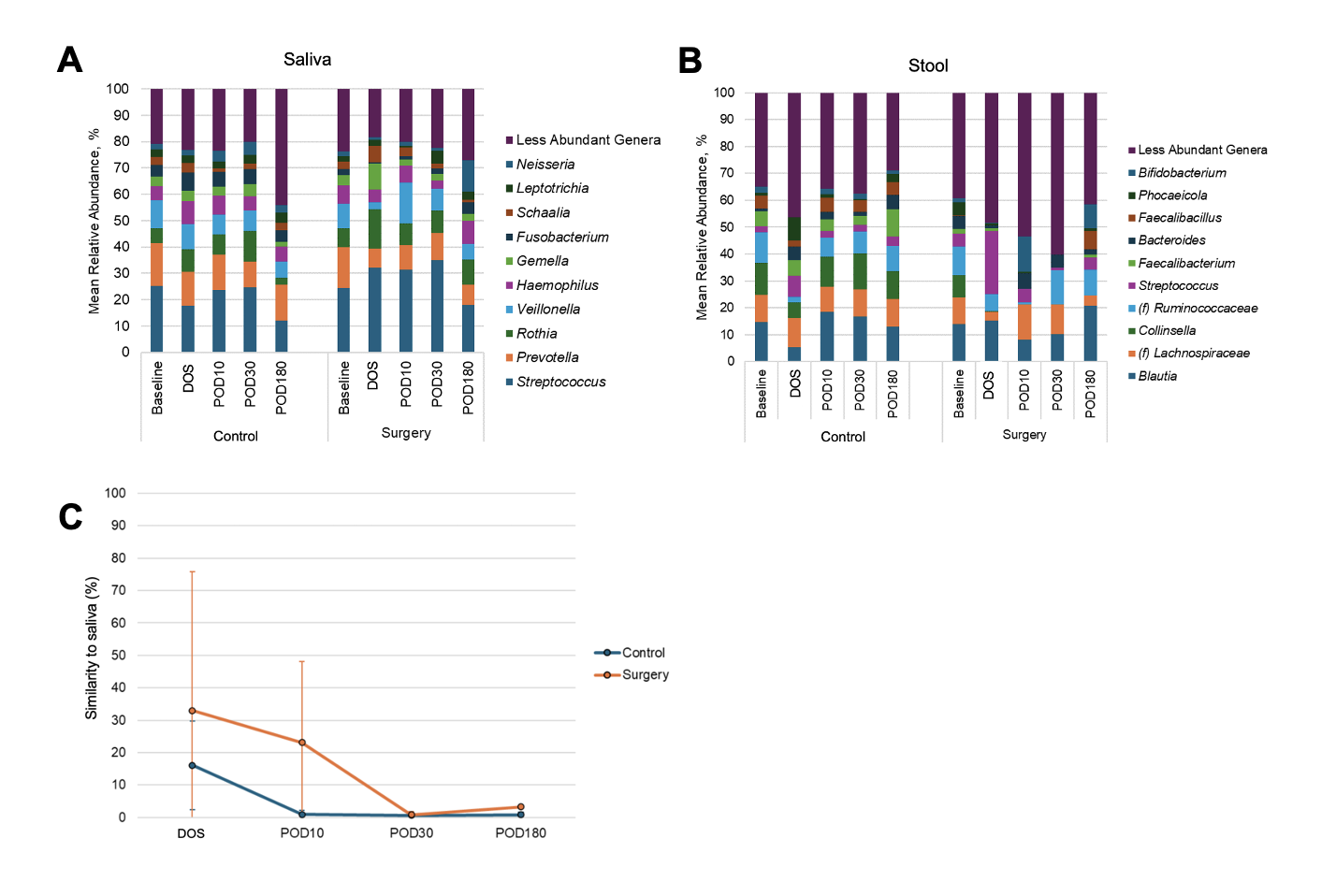 A) Relative abundance of predominant taxa in saliva samples in control and surgical patients at baseline, day of procedure (DOS), and postoperative day (POD) 10, 30, and 180. B) Relative abundance of predominant taxa in stool samples in control and surgical patients at the same timepoints. C) Similarity of stool samples of control and surgical patients compared to saliva samples of each cohort.